
The exhibition Bauhaus Ecologies – Webs of Continuity opens up with the question whether the historical Bauhaus can be read from an ecological perspective. In doing so, ecology is understood not only as a theme, but as a way of thinking, as a web of relations between materials and ideas, past and present practices, between art and the everyday. Within this framework, ecology is establishing connections between materials, technology and social conditions, and recycling becomes an essential method for reading and connecting artworks, the way in which forms and methods of the modernism were introduced in the art practice from the second half of the 20th century until today. In that way, history is not confined to archives, but returns to the present as a starting point for examination of space and materials, and our common world.
Avant-garde artists were pondering over the future of nature, environment and climate already in 1920s, and the Bauhaus artists were searching for new ways of expression inspired by different currents of thought, including biocentrism, philosophy of nature, holistic interpretations and organicism. In that context, ecological thinking has not emerged in the Bauhaus as a separate topic, it was recognised in the basic tenets of this school – learning by doing, examination of relationships between materials and forms, functions and space – and also in the collective work organized at the boundaries of technology and designs, of art and the everyday.
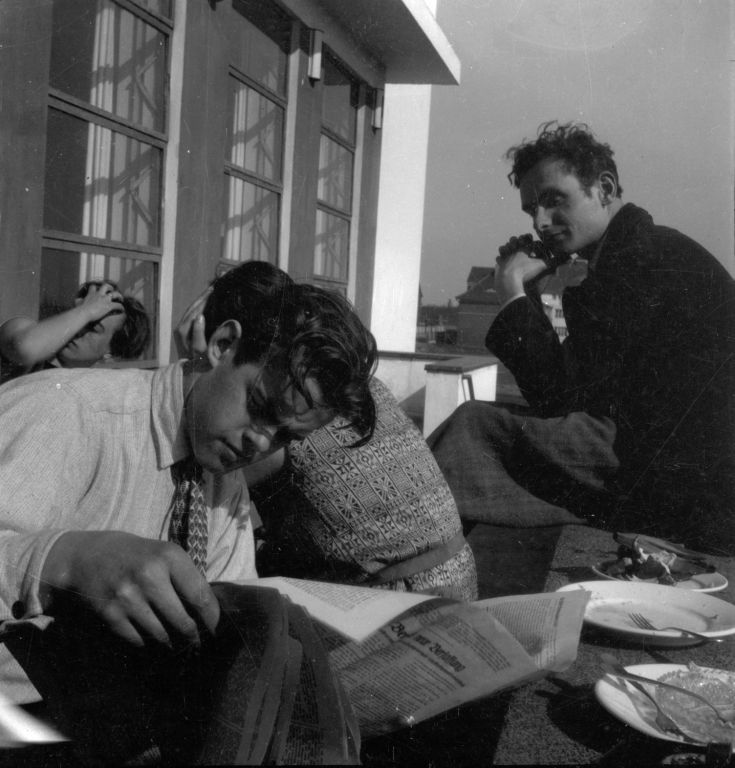
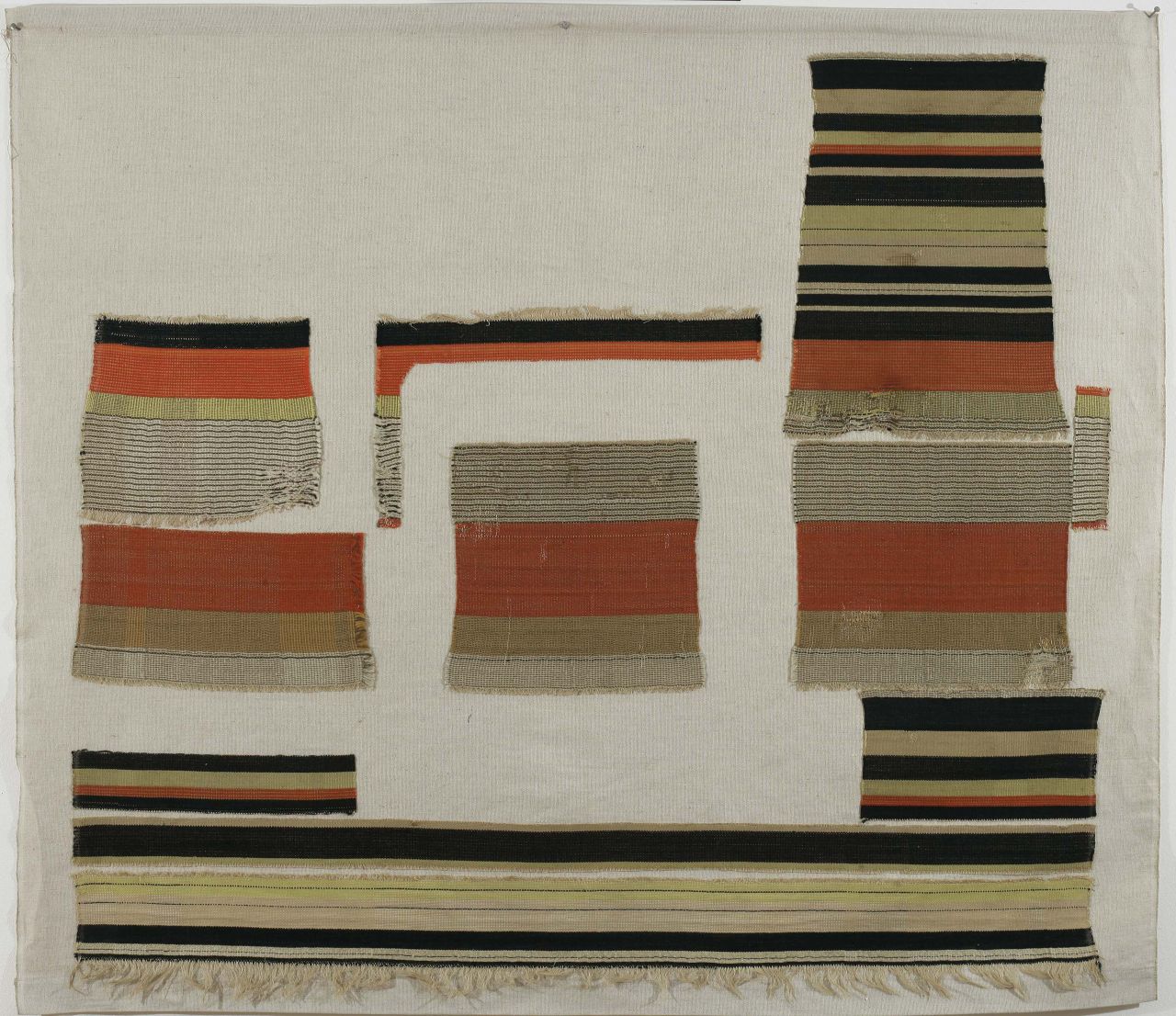
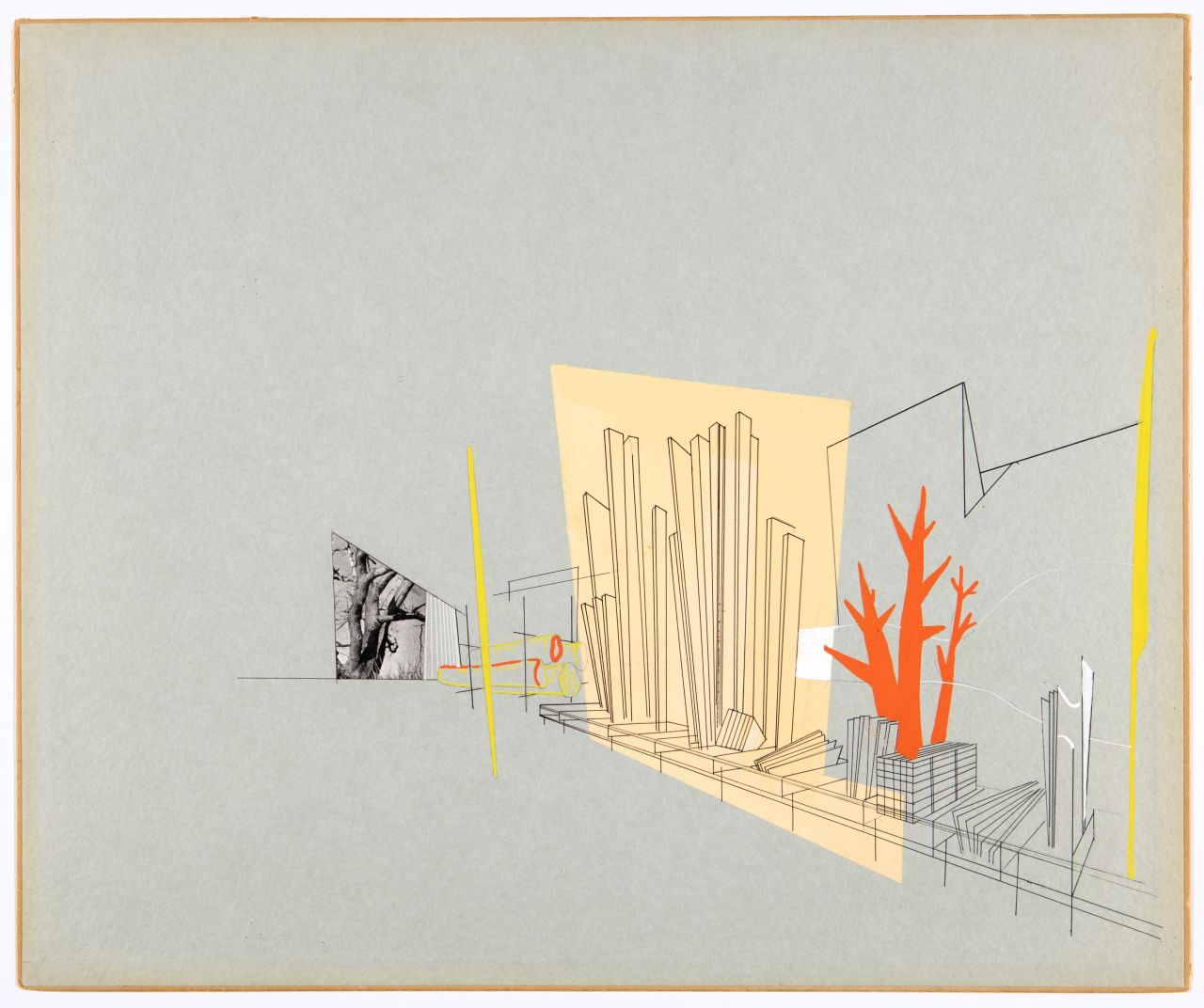
Artworks from the collection of the Museum of Contemporary Art related to the Bauhaus heritage and its reverberations in art practices after the World War II were used as a starting point for the exhibition Bauhaus Ecologies – Webs of Continuity. Works by Otti Berger, Ivana Tomljenović Meller, and the EXAT 51 group, are three standpoints from which the modernism is perceived as a living system, as a web of processes, relationships, and transformations. In her work, textile designer Otti Berger posed questions about material, structure and tactility; films and photos by Ivana Tomljenović Meller demonstrated how rhythm and repetitions are forming perceptions of time and space, as well as the relationship between natural cycles and the everyday, and members of the EXAT 51 group developed spatial schemes whereby the shaping became method for the spatial organization as a system of relations and ways by which the space is constructed, used and shared. In this reading of historical artworks, ecology enters as a way of thinking, in terms of "the three ecologies" linked by the French philosopher and psychotherapist Félix Guattari – environmental, social and mental ecology. Hence, modernism is not understood as a closed historical style, but as an open archive of possibilities which can be read critically and reintroduced in the contemporary social and environmental context. In the exhibition, Guattari's threefold perspective finds a parallel to the three levels of linking artworks – material, conceptual and social – by which changes in materials, relationships and meanings are traced over time.
Recycling is an essential method for connecting the historical and the contemporary, understood as a process of translation and change of meaning, and at the same time as a way to read a web of relations between works. In material sense, reusing and repurposing of materials is implied, as well as the work on traces of time layers which were inscribed in them. On the conceptual level, the recycling denotes a shift in reading and the reinterpretation of historical terms, methods and forms, in order to translate and reintroduce them in the new context, while on the social level recycling enters as exchange of knowledge and collaborative practices, and also in connection with collective and institutional memory.
Exhibition is organized in three sections: Material as a Structure, Rhythm of the Picture and Space as a System, whereby each section establishes its own way of reading the continuity by connecting historical footholds with artworks made from the second half of 20th century until today. This relationship is thus shown as aesthetic and ethical procedure by which a material and its traces, ideas and knowledge as well as cultural layers are reinterpreted and exposed to new meanings.
The exhibition Bauhaus Ecologies – Webs of Continuity is a part of the international research project Bauhaus Ecologies carried out by the Stiftung Bauhaus Dessau in cooperation with the Museum of Architecture and Design in Ljubljana (MAO) and the Museum of Contemporary Art in Zagreb (MSU). The project starts with analysis of their three collections through the prism of ecology, and questioning how modernistic ideas had been shaped, disseminated and transmitted in contemporary art practices. Within the framework of the project, students from the Department of Art Education of the Academy of Fine Arts in Zagreb participated in the program Bauhaus Study Rooms 2025 which the Stiftung Bauhaus Dessau is implementing, and they conducted artistic research of works from the MSU collection under mentorships from Ivan Skvrce, Nikola Bojić and Marko Tadić.
Artist: Otti Berger, Jagoda Buić, Jasmina Cibic, EXAT 51 group, Ivan Ladislav Galeta, Mladen Galić, Mihael Giba, Tomislav Gotovac, Tina Gverović, Hrvoje Hiršl, Ana Hušman, Marijan Jevšovar, David Maljković, Zvonimir Malus, Hana Miletić, Antun Motika, Milan Pavić, Slavka Pavić, Mladen Stilinović, Marko Tadić, Ivana Tkalčić, Ivana Tomljenović Meller, Silvio Vujičić
Curator: Vesna Meštrić
Visual identity and visual setup: Oaza